



1. Energy Bars
[ image id="244373" caption="" loc="C" share="true" expand="true" size="M"]
Especially when they tout how much fiber and protein they're packed with — or how minimal their "net carb" count is — energy bars may seem like super-healthy snacks. (After all, they're sold at health food stores and most gyms, and athletes eat them, so...?) But before you plop one of these plastic-wrapped blocks of "nutrients" in your mouth, consider how heavily processed most of them are.
Kristin Kirkpatrick, MS, RD, LD, says the more ingredients listed on the label, the more manufactured (read: divorced from actual food) energy bars are. Common ingredients in many energy bars are fancy names for different forms of sugar, Kirkpatrick says. They spike blood sugar levels and court a crash later on without providing lasting satisfaction and energy.
Instead of reaching for a bar next time you're struck with an afternoon snack attack, try slathering a few tablespoons of nut butter on an apple, or dipping a few carrot or cucumber slices with hummus.
2. Low-Fat or Fat-Free Yogurt
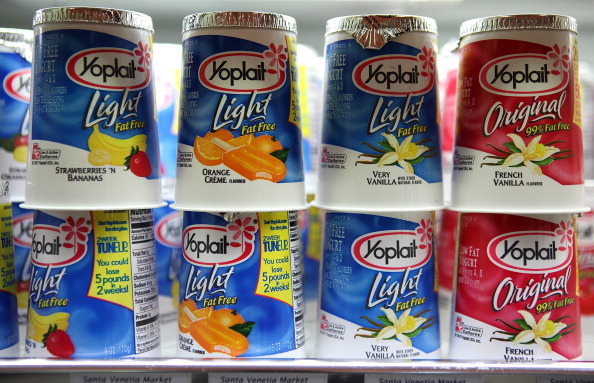
When a food product cuts out or reduces something we've learned is "bad" from its contents, we falsely conclude it's "better" for us. Not necessarily, Kirkpatick cautions. Especially when it comes to nixing fat.
Great to take out the saturated stuff, she says. Not so great if manufacturers compensate for the tastiness lost in doing so by pumping their yogurts full of sugar. Many low-fat and fat-free yogurts are so high in sugar that they might as well be considered dessert. Dietary sugars can bump upbad cholesterol levels in your blood, defeating the purpose of picking less-fatty brands.
Check the labels on the low-fat or fat-free yogurts you're considering, and opt for ones with no sugar listed at all in the ingredients, Kirkpatrick advises. Dairy naturally has sugar in it (it's called lactose) but choose brands whose grams of the stuff is in the single-digits. Pro tip: Look for unsweetened Greek yogurts, which have less lactose.
3. Fro-Yo

Not as caloric or fattening as some ice creams, but still not necessarily good for you. Frozen yogurt may seem deceptively healthy simply because "yogurt" is in its name. But re-read what you just learned about yogurt (above) and you'll realize that's no grounds to consider the stuff on par with steamed vegetables. Fro-yo's sugar levels are definitely in the double digits, and some brands have even been outed for deceiving customers about how many calories are truly in one serving.
No shame in loving the stuff and allowing yourself the pleasures of fro-yo's many different brands and flavors. But treat it just as you would any other dessert (i.e., don't misconstrue it as a health food.)
4. Smoothies

Just because they're jam-packed with whole fruits doesn't mean smoothies are great for our blood sugar levels or for our belt sizes. Kirkpatrick cautions against massive blends of bananas, berries, and other tree-born sweets because they can push your sugar intake over the recommended daily limit of 25 grams — especially if the smoothie you're drinking them out of is store-bought, since Kirkpatrick says most smoothie places add sugar to their berry mixes. If you're making one at home, half a cup of berries should suffice.

 Ucom Becomes an Official Partner of the Armenia-UK Business Forum 2026
 Ucom Sales and Service Center at 20/52 Erebuni Reopens After Renovation
 Unibank Joins the Armenian Solar Energy Association
 The Widely Discussed Dvin Crown Project. A New Visibility Platform for Brands Has Emerged in the Heart of Yerevan
 Ameriabank named Most Innovative Digital Bank in Armenia, alongside 9 Global Finance Digital Banking Awards
 Unibank and Picsart Academy Host Kids Day for Children
 Unibank Issues AMD and USD Bonds with Annual Coupon Rates of 10.3% and 6%
 Artur Hovhannisyan and the Ambassador of Bulgaria to Armenia discussed a number of programs of mutual interest to Armenia and Bulgaria
 A new and fantastic story was born in the heart of Yerevan—the spirit of the old city at Hayasa Hotel Old Yerevan
 Converse Bank is Lead Sponsor of the BACEE International Banking Conference
 Ralph Yirikian on the Cost of Digital Transformation at the 13th Regional HR Conference
 You Can Now Pay with Idram on Glovo: The Long-Awaited Partnership Is Now a Reality
 Rate.Trading: Currency Exchange on a New Digital Platform
 Idram's "City of Good Deeds": From Teamwork to Real Charitable Projects
 Ucom and FAST Bring Together Artificial Intelligence and Green Innovation
 From Car Selection to Purchase – All in One Place: Ameriabank to Present its Myar.am Platform and Special Offers at Armenian Auto Show
 IDBank and the “Dekavva Fund” Stand with People from Artsakh
 Ucom Supports AI-Powered Camera Installation for Nature Conservation
 Dmitry Ishkhanov Opens the New Steinway’s Concert Life in Pardubice
  Ucom Fellowship Participants Meet Ralph Yirikian at Ucom
 Unibank Becomes Title Sponsor of Alashkert Football Club
 Sergey Smbatyan’s Music for Future Foundation and the Lang Lang International Music Foundation Invite Young Pianists to Apply for the Prestigious Lang Lang Young Scholars Program
 Unibank Call Center Now Available 24/7 on Weekdays
 Ralph Yirikian Discusses the Challenges of Modern Leadership with Leadership School Participants
 Unibank Becomes Lead Sponsor of AGBU’s Global Run in Support of Camp Nairi
 Unibank’s Renamed “Tumanyan” Branch Opens at a New Location
 Ucom Continues Large-Scale Network Modernization, Expanding 5G Coverage and Enhancing Connectivity
 EBRD’s AMD-denominated bonds listed on AMX; Converse Bank acted as underwriter
 Become a Unibank shareholder and acquire perpetual bonds with a 13.25% yield
 The Unprecedented Educational Summer of the 'Armenian Virtuosos'
 All Armflix Content Is Once Again Available on Uplay
 Hayk Melikyan Opens the 5th Festival of Armenian Culture in Katowice
 Harutyun Harutyunyan: “The Government Has No Intention of Applying for EU Membership
and Adopted the Law to Prevent a Referendum”
Harutyun Harutyunyan: “The Government Has No Intention of Applying for EU Membership
and Adopted the Law to Prevent a Referendum” Ucom Supports Coca-Cola Fest 2026
  “Orran” Students Start the New Academic Year with Support from “The Power of One Dram”
 It is with deep awareness of the seriousness of this supposition as well as concern that we pose the question of the above headline
 “Armenian Virtuosos” Scholarship Recipients Take the Stage at the 4th International Festival of Youth Orchestras of the World
 Unibank Launches a New Promotion "U-Teenager": Grand Prize — a Summer Course at One of the Top Universities Abroad
 SEROOND Begins: Armenia’s First Authored School Model Based on Whole-Child Development, Enabled by AI
 "Unisport" Advances to the Main Round of the UEFA Futsal Champions League
 Cybersecurity Course Graduates Take Part in Ucom’s “Junior Academy” Program
 Ucom Introduces Green Tariff Plans, Turning Everyday Connectivity into Environmental Impact
 Ucom Launches “Unity Back to School” Special Offer for the New School Year
 Ucom’s Sales and Service Center Reopens at 7 Sayat-Nova Street in Gyumri
 "Unisport" Competes in the UEFA Futsal Champions League
 Aram Barseghyan Appointed CEO of Team Telecom Armenia, Hayk Yesayan to Lead Team Group
  Letter of Congratulations to His Holiness Karekin II on His 75th Birthday
 “Side by Side” Program for Artsakh Families in the Sevan Community: IDBank
 Arega Hovsepyan is our candidate for Chair of the Committee on European Integration
 The Final Round of the Junius Tournament Has Begun

 ZCMC CJSC general director R.N. Khudoli on the օccation of Internatioanal Labour day
 World Bank Armenia has organized discussion on facilitating women’s wider engagement in sectors that have been traditionally male dominated in the country
 On the occasion of International Women's Day ZCMC employees were awarded
 ZCMC declares, that the Russian company GeoProMining LLC has never been and is not currently a shareholder of the Company, nor does it have any stake in the Company's ownership structure
 No international support and no organization to take real steps to prevent decades of cultural, ethnic and religious hostility towards Armenians and their heritage. Anna Kostanyan


 Artur Hovhannisyan and the Ambassador of Bulgaria to Armenia discussed a number of programs of mutua...1
 The Widely Discussed Dvin Crown Project. A New Visibility Platform for Brands Has Emerged in the Hea...2
 Ucom Becomes an Official Partner of the Armenia-UK Business Forum 20263
 Converse Bank is Lead Sponsor of the BACEE International Banking Conference
4
Converse Bank is Lead Sponsor of the BACEE International Banking Conference
4
 A new and fantastic story was born in the heart of Yerevan—the spirit of the old city at Hayasa Hote...5