

Why the Pressure on Vahe Hakobyan Continues
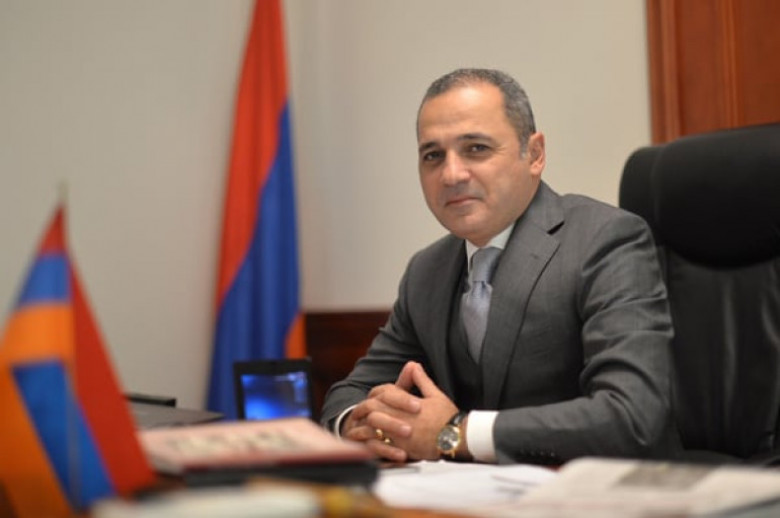
The pressure exerted on Vahe Hakobyan, his circle, and his family—including his wife and children—does not continue because of his current actions or political status. The reason lies elsewhere: Nikol Pashinyan is rapidly losing public support and effective legitimacy and is attempting to compensate for this loss through demonstrative displays of power.
When a government can no longer rely on trust, it begins to manufacture the appearance of control. Loud cases emerge, accusations are made public, and a constant background of pressure is created. The objective is not to establish guilt, but to project activity and authority at a time when approval ratings are collapsing.
It is crucial to understand that the case of Vahe Hakobyan is not an isolated one. At present, more than fifty criminal cases have been fabricated against various business figures. This is not coincidence, nor is it a genuine fight against corruption. It is a systematic campaign of pressure against individuals who refused to “reach an agreement”—people whom the authorities are now attempting to force into loyalty or, at the very least, into silence and neutrality.
In this context, one fact is particularly revealing: in 2022, Vahe Hakobyan resigned his parliamentary mandate and left parliament. He holds no public office, does not participate in the current structures of power, and operates outside the political system. Yet the pressure on him has not ceased—on the contrary, it has intensified.
The explanation is straightforward. In a situation of lost legitimacy, any independent individual becomes a perceived threat—even someone who has formally stepped away from political life. Independence itself is treated as a risk, as a reminder that control is neither total nor guaranteed.
This is why the pressure extends beyond the individual and targets family members, friends, and associates. What is unfolding is no longer a legal process, but a method of psychological intimidation. The aim is not merely to break one person, but to eliminate the very possibility of refusing the imposed rules.
What we are witnessing is not strength, but fear. Not control, but its erosion. And the closer the elections approach, the more such cases appear, the broader the pressure becomes, and the louder the political spectacle grows.
The story of Vahe Hakobyan is not about one surname. It is a symptom of a system that, having lost public confidence, seeks to preserve itself not through persuasion, but through coercion.